
Autodesk University 2026 - Future proof Modeling Pipelines with USD in Maya - Session (FTV2362) demonstrating non-destructive Max-to-Maya-to-Houdini OpenUSD pipelines, LookdevX/MaterialX shading, and scalable asset iteration.
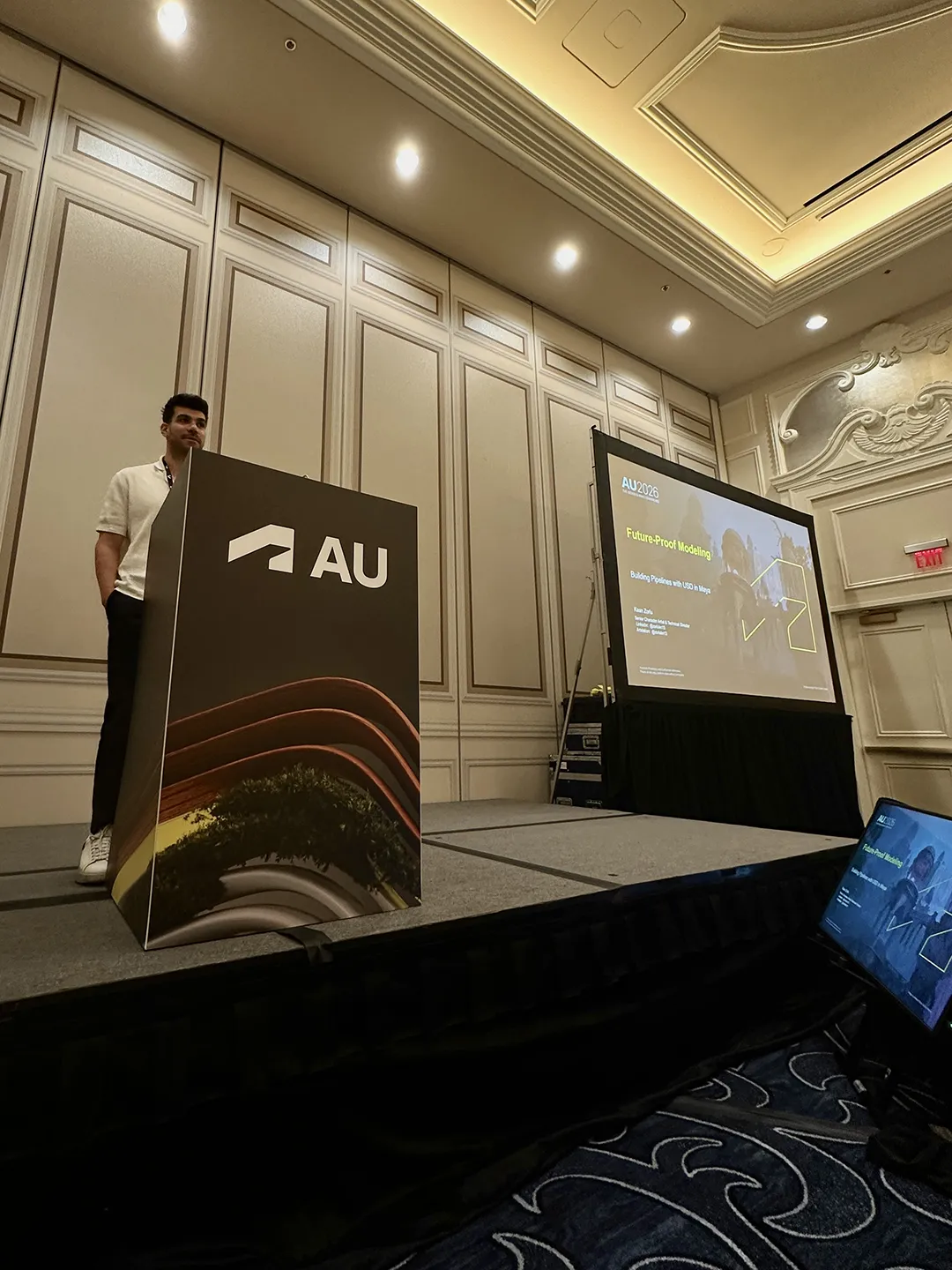
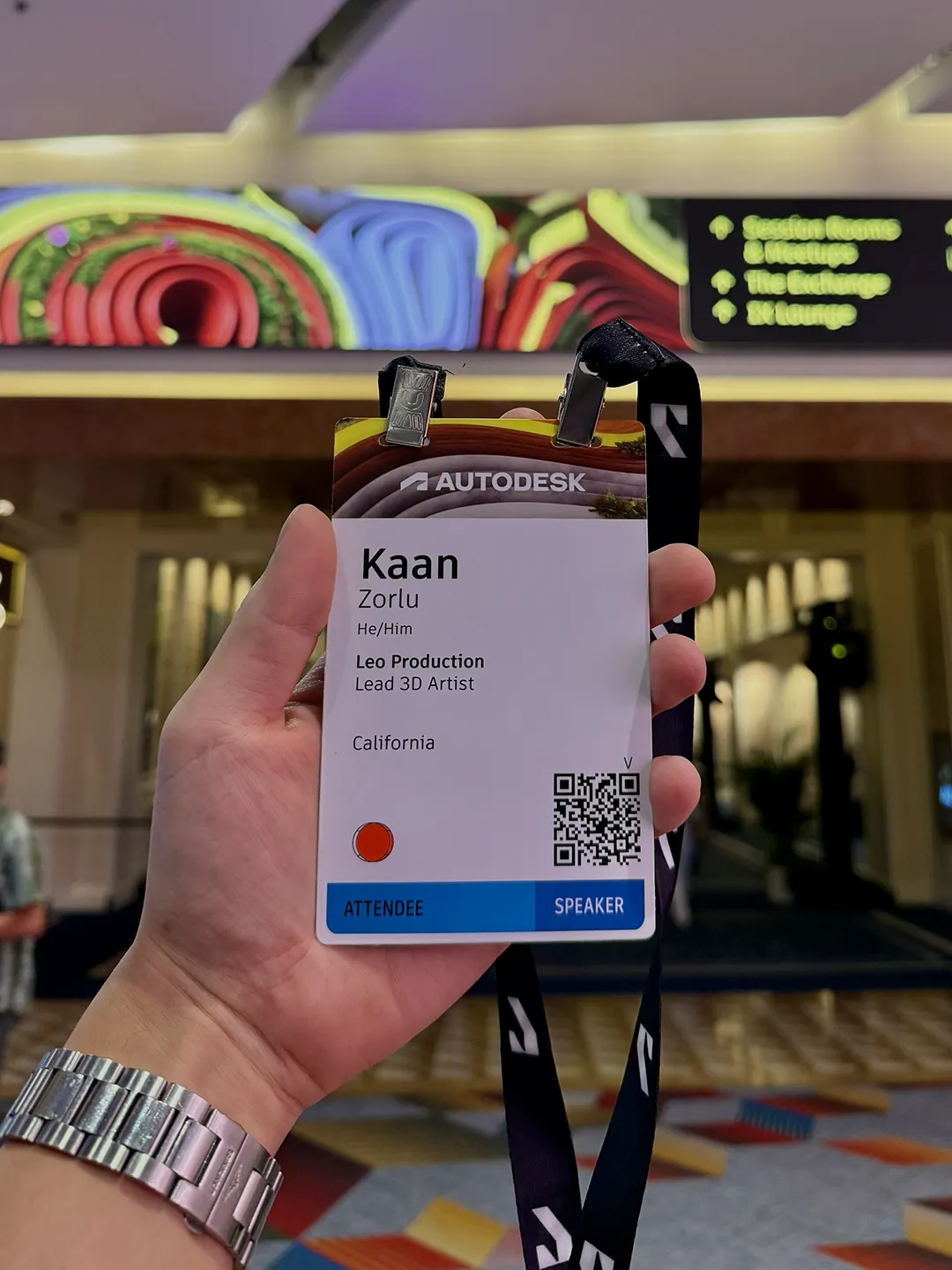


Session Overview (FTV2362)
Traditional pipelines treat every department handoff as a one-way export between platforms: modeling, shading, staging, and animation each get rebuilt from a frozen snapshot of the last person's work. On a production with a thousand assets, that architecture turns a thirty-second art-director note into hours or days of cascading rework.
In this technical session at Autodesk University 2026, Kaan Zorlu breaks down a non-destructive alternative built on OpenUSD's composition model (references, payloads, and variant sets) spanning Maya (via MayaUSD and MaterialX/LookdevX) and Houdini Solaris.
Learning Objectives
- Explain why one-way export pipelines between Maya and Houdini create cascading rework when a model changes.
- Describe OpenUSD's core composition mechanisms: References, Payloads, and Variant sets.
- Build non-destructive Maya-to-Houdini USD pipelines using MayaUSD and LookdevX / MaterialX.
- Apply USD-based composition to reduce the cost of iteration on production assets.
The Architecture: Non-Destructive Maya-to-Houdini Workflow
Modeling in Maya remains intuitive and non-intrusive. Shading is authored in Maya using LookdevX (Autodesk's USD/MaterialX shade-graph tool) and saved to its own USD layer rather than baked onto the geometry. Staging, layout, animation, and simulation take place in Houdini Solaris, referencing that same source file instead of an exported static copy.
When the source asset changes in Maya, the Houdini environment reloads the reference in one click, preserving shading setups, variants, and downstream physics collision logic without manual scene re-assembly.