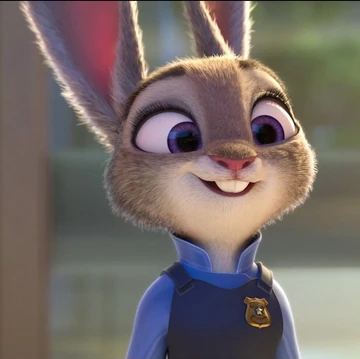
Directing the Groom: The Zootopia Standard for XGen.
Most artists treat hair and fur as a simulation, something you "calculate" and hope the grooming engine handles correctly. But in a hi... ...gh-end production pipeline, simulation is just the starting point. To achieve the "Zootopia Standard," you have to stop being a user of XGen and start being an Art Director of every strand.
The difference between a "hired gun" and a Senior Artist is the ability to move past the "Generate" button and into Intentional Grooming.
1. The Gesture of the Groom
In films like Zootopia, fur isn't just a texture; it’s an extension of the character’s silhouette. If the hair flow doesn't support the character's gesture, the "Appeal" breaks.
Beyond Gravity: While physics-based hair is "correct," it’s often boring. Senior artists force the groom to follow the character's personality and movement rather than just the laws of gravity.
Visual Rhythms: Use guides to create specific "flow lines" that lead the viewer’s eye toward the face or key visual anchors.
Intentional Clumping: In my personal work, like the "Love Potion" project, clumping isn't randomized. It is engineered to create a specific rhythm that feels organic and "hand-crafted".
2. Breaking the Procedural Trap
XGen and other grooming tools are built on procedural logic. They love patterns, symmetry, and "perfection." Unfortunately, perfection is the enemy of believability in 2026.
Manual Clump Placement: Instead of relying on noise modifiers to do the work, manually place your primary guides to define the silhouette.
Designing "Friction": Introduce subtle irregularities in length, stray hairs, and "flyaways" to break the digital look. This "Human Friction" proves to a director that the groom was designed, not just generated.
The Decision-Maker Mindset: Your value as a Senior is having the Visual Authority to know when a procedural system is failing the story and having the technical depth to fix it.
3. Engineering for Production
A groom that looks great but won't render is a failure. Whether you are working on a game-ready asset for the Fortnite Icon Series or a cinematic render, optimization is a creative skill.
Managing Density: I’ve managed scenes with millions of polygons and dense hair on personal hardware by being strategic about where the detail lives.
Shader Logic: Don't just rely on the default hair shader. Custom PBR logic, like what I used for the Taylor Swift project, allows you to catch stage lights and highlights without bloating your render times.
Arnold Integration: Always test your groom under varied lighting early. A groom that only looks good in an HDRI isn't production-ready; it needs to hold up under the "Diplomacy of Design" in a real scene.
The Takeaway for 2026
Stop letting the software dictate the "look" of your characters. Use the tools to build the foundation, but use your Taste to finish the groom. When you direct the groom with intent, you aren't just making hair; you're building an icon.
Read more