The Blueprint of Appeal: Why Your Character is a Shape First
In the world of the "Classics," a character’s success isn't measured by their polycount or the complexity of their shader... ...s. It’s measured by their Shape Language.
If you strip away the textures, the groom, and the lighting, the character must still communicate its entire personality through its silhouette alone. This is the Blueprint of Appeal.
1. The Power of the Silhouette
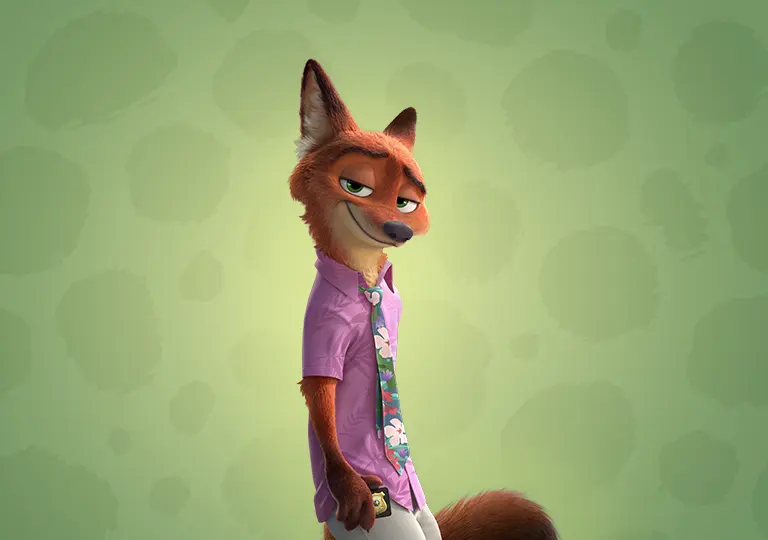
Think of the icons from Frozen or Zootopia. Their silhouettes are so distinct that they are recognizable even as a flat black shape on a white background. This isn't a happy accident; it is intentional design.
Designing in the Viewport: Instead of relying solely on 2D guides, I prefer to design directly in the 3D viewport. This allows me to "sketch" in 3D, locking in silhouettes that hold up from every camera angle.
Organic Evolution: Once the composition and the character's core shapes are locked in Maya, only then do I move into organic sculpting.
Visual Clarity: A strong silhouette allows the storytelling to be clear before a single light is placed. If the gesture doesn't read in black and white, it won't read in full PBR.
2. The "Disney DNA": Beyond Simulation
Modern 3D tools have made it incredibly easy to "simulate" reality, but reality is often boring. The masters at studios like Disney or Sony don't just simulate; they Art Direct.
Intentionality over Physics: In Frozen, Elsa’s hair doesn't just fall; it flows in a way that supports her emotional state. This requires the artist to force the software to follow their eye, rather than just the laws of gravity.
Visual Anchors: Every successful character has specific structural points that anchor the viewer’s eye. These are the "fixed points" that allow a stylized character to feel believable and "alive."
The Appeal Trap: Many artists fall into the trap of over-detailing. In stylized art, detail should only exist to support the primary shapes. If the detail softens the silhouette, it’s a distraction, not a feature.
3. The 10+ Year Eye: Developing Visual Literacy
I started exploring the viewport at age ten, long before the era of "one-click" tutorials. I learned by reading the internal documentation and studying the masters of the 2D era.
What I realized then, and what remains true in 2026, is that software is a seasonal tool, but Visual Literacy is a permanent career.
The Tool is a Commodity: Anyone can learn a software update. Very few can learn the "Why" behind a successful character.
Seniority is Decision-Making: Being a Senior Artist isn't about how fast you work; it's about the quality of the decisions you make. It’s having the authority to say "No" to a procedurally generated result because it lacks the necessary "Appeal."
Building for Longevity: When you focus on the fundamentals of shape and structure, your work doesn't expire. It remains as relevant and resonant as the classics we still study today.
The Takeaway for 2026: As we move further into an era of automated art, your "Artistic Fingerprint" is your only protection. Stop chasing the latest software update and start studying the blueprints. Learn to be an artist first and a technician second.
Read more